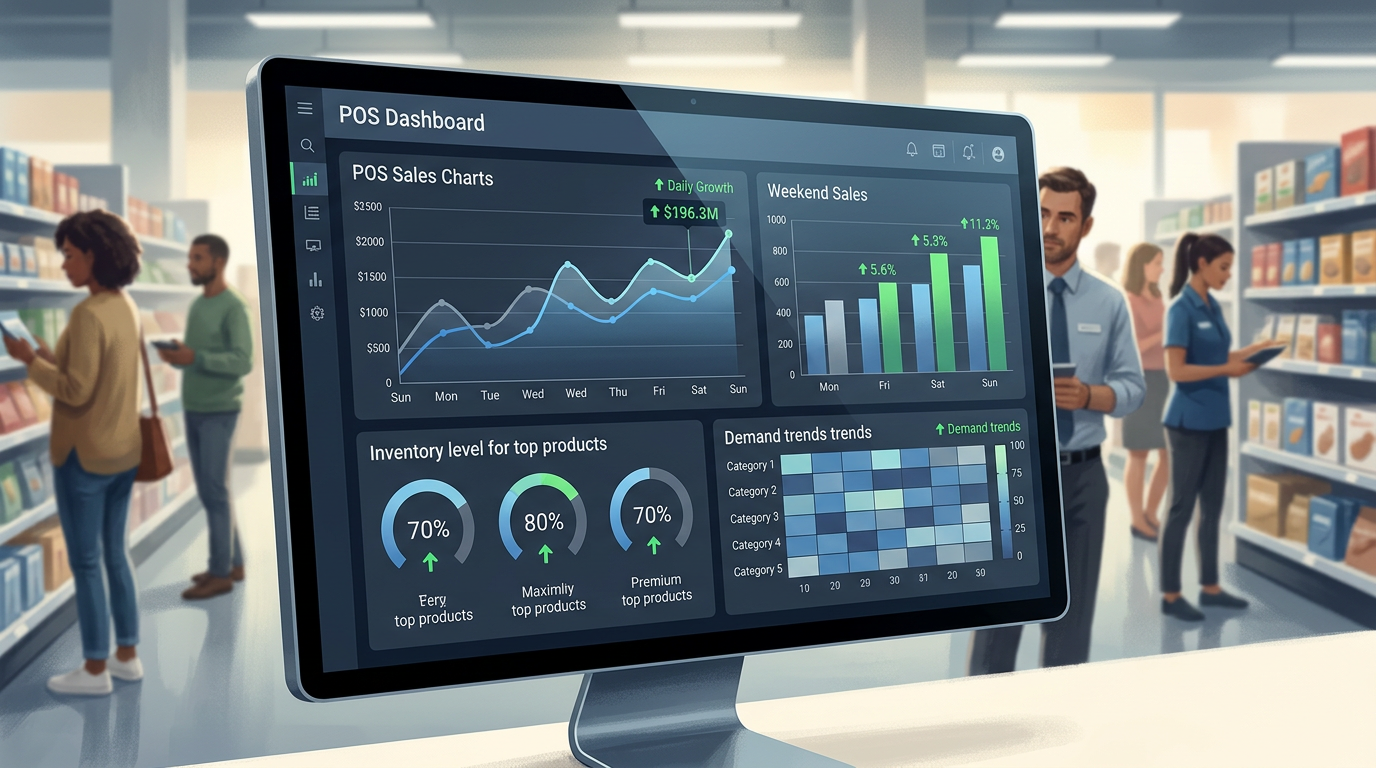
POS Data Analytics: Smarter Decisions for Retailers
POS data analytics is one of the most underused assets in retail — most organizations collect it, few actually act on it. Transaction-level data holds precise signals about demand patterns, product performance, and customer behavior. The gap between collecting that data and making faster, better decisions is where retail profitability is won or lost.
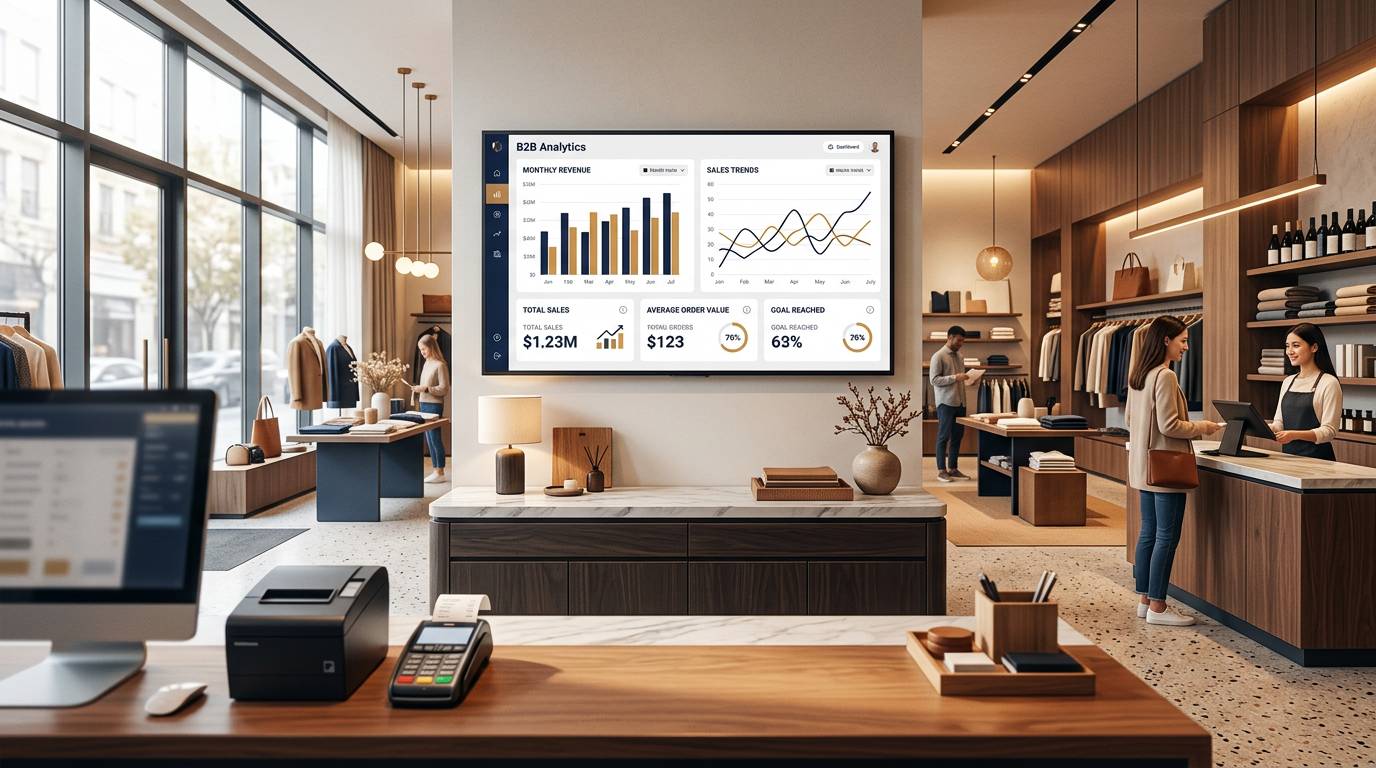
The Data Is Already There — The Problem Is What Happens Next
Every retail transaction leaves a trace. POS data analytics gives you the ability to read those traces and turn them into decisions that actually move the business — on pricing, inventory, staffing, and promotions. Yet most retailers are sitting on months of rich transaction history that never gets analyzed beyond a weekly sales summary.
The gap isn't data collection. It's the infrastructure and analytical approach to make that data usable, fast, and actionable at the store or category level.
What Your POS Data Is Actually Telling You
Transaction records are more than a revenue ledger. At the SKU level, they carry demand signals that aggregate reports obscure. A product category might look stable in weekly totals while one store is burning through stock and another has 90 days of cover sitting idle. That difference only shows up when you analyze at the right granularity.
The most useful signals buried in POS data include:
- Sales velocity by location — which stores are outperforming category averages and why
- Time-of-day and day-of-week patterns — critical for staffing, replenishment scheduling, and promotional timing
- Basket composition — what products are purchased together, informing cross-merchandising and bundling
- Promotion pull-through — whether a promotional SKU is actually lifting the basket or just discounting existing demand
- Early stockout indicators — declining sales rates that signal a shelf gap before it shows up as a zero in inventory
None of these require exotic modeling. They require clean data, the right queries, and a system that surfaces them consistently.
From Reporting to Forecasting: The Practical Upgrade
Most retail teams live in reporting mode — looking backward at what sold. The operational shift worth making is using that same POS data to look forward, even modestly.
Demand forecasting doesn't have to mean complex machine learning pipelines. At its most practical, it means using historical sales patterns at the SKU and store level to set more accurate reorder points, anticipate seasonal transitions before they hit, and allocate inventory where it will sell fastest.
Deloitte's retail research consistently highlights that margin pressure in retail is intensifying — and that operational precision, not just top-line growth, is where resilient retailers differentiate. Smarter inventory decisions driven by POS data are one of the clearest paths to protecting margin without cutting assortment.
Why Most Retailers Aren't Getting Full Value From POS Data
The honest answer is infrastructure. POS systems generate enormous volumes of transaction data, but that data typically lives in formats that are hard to query, inconsistently structured across store systems, and disconnected from inventory, supply chain, and planning tools.
The result: analysts spend most of their time extracting and cleaning data rather than analyzing it. By the time a report surfaces, the operational window to act on it has often closed.
Gartner has noted that data accessibility — not data volume — is the primary constraint on retail analytics maturity. Having terabytes of transaction history is irrelevant if your team needs three days and a SQL expert to answer a basic demand question.
This is the infrastructure problem that Data Archos is built to solve. The platform ingests POS and operational data, normalizes it across store systems, and makes it queryable in near real time — without requiring retailers to rebuild their data stack from scratch.
Making POS Insights Operational, Not Just Visible
Visibility is a starting point, not a destination. The goal of POS data analytics is to change what happens on Monday morning — what gets reordered, what gets marked down, which stores get replenished first, and where the merchant team focuses attention.
Practical steps retailers take to operationalize POS insights:
Connect POS data to replenishment workflows. Sales velocity data should feed directly into reorder triggers, not sit in a separate reporting tool that someone has to manually check.
Build store-level views, not just chain-level averages. Chain averages hide variance. A store in a tourist corridor has different demand patterns than a suburban location in the same brand. Analytics that flatten these differences produce recommendations that don't fit either store well.
Create exception-based alerts. Not every analyst can monitor every SKU every day. Automated flags for anomalies — a sudden drop in velocity, an unusual return spike, a promotion with no lift — direct attention where it's needed without requiring constant dashboard monitoring.
Align POS data with external context. Layering in local events, weather patterns, or competitor activity gives demand signals more explanatory power and makes forecasts more accurate over time.
The Merchandising and Operations Payoff
Retailers who treat POS data as an operational input — not just a reporting output — see concrete results: tighter inventory positions, fewer markdowns, faster sell-through on seasonal goods, and better alignment between what's on the shelf and what customers are actually buying.
McKinsey's retail research has documented that data-driven merchandising decisions, when implemented systematically, can meaningfully reduce excess inventory and improve full-price sell-through rates. The underlying enabler in almost every case is better use of transaction-level data.
This isn't about deploying AI for its own sake. It's about closing the gap between the data you already have and the decisions you need to make every week.
Ready to Put Your POS Data to Work?
If your team is spending more time pulling reports than acting on them, the underlying data infrastructure is worth examining. Data Archos works with retail and merchandising teams to build the data pipelines and analytics layer that make POS data genuinely useful — at the speed decisions actually get made.
Schedule a demo at dataarchos.com to see how retailers are turning transaction data into faster, more confident decisions across stores, categories, and seasons.
Frequently Asked Questions
What is POS data analytics in retail?
POS data analytics refers to the process of analyzing transaction data from point-of-sale systems to identify demand patterns, sales trends, inventory needs, and product performance. Retailers use it to make better buying, pricing, and staffing decisions.
How can POS data improve inventory management?
By analyzing sales velocity, seasonal patterns, and store-level variation in POS data, retailers can set more accurate reorder points, reduce overstock, and minimize out-of-stock events — without relying solely on manual judgment or static spreadsheets.
What are the biggest challenges with using POS data effectively?
The most common challenges are data silos, inconsistent product hierarchies across stores, and the lack of tools to turn raw transaction records into actionable insight at speed. Many retailers have the data but lack the infrastructure to query and act on it in near real time.
How does POS analytics differ from traditional sales reporting?
Traditional sales reporting shows what happened in aggregate — revenue, units, margin. POS analytics goes deeper, surfacing which SKUs are driving pull-through, where demand is shifting before it shows up in weekly reports, and how promotions are actually performing at the transaction level.
Can small and mid-size retailers benefit from POS data analytics?
Yes. The analytical approaches that benefit large retailers — demand forecasting, basket analysis, sell-through tracking — are equally applicable to smaller operations. The key is having the right tooling that doesn't require a dedicated data science team to operate.
Sources
- The State of Fashion 2024: Retail's Next Normal — McKinsey & Company
- Retail Industry Outlook 2025 — Deloitte
- Top Trends in Retail for 2025 — Gartner